
Have you ever wondered why some manicures last a full month while others seem to lift after just a few days? Or maybe you’ve been told that you need to “let your nails breathe” between sets?
In the world of professional nail care, there is a massive difference between pretty polish and a healthy foundation. To get the most out of your sets, you need to understand the science happening right at your fingertips. As a professional nail technician, I believe that an educated client is a happy client.
In this guide, we are going deep into the biology of the nail, how to maintain your natural strength, and finally putting those tired nail myths to rest.
Want to see these principles in action? Check out my Instagram to see how healthy prep leads to stunning, long lasting results.
Nail Anatomy 101
Most people think of the nail as just the hard surface we paint. In reality, the nail is a complex system of living and non living parts. Understanding this anatomy is the first step toward preventing damage.
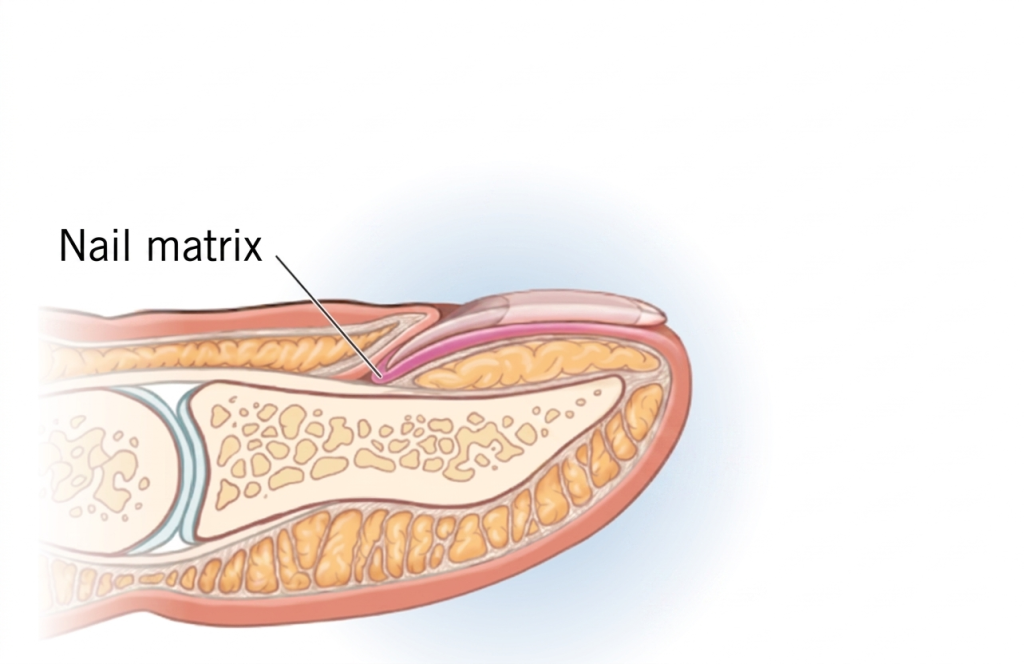
1. The Matrix
The matrix is the most important part of your nail. It’s located under the skin behind your cuticle. This is where new nail cells are produced. If the matrix is damaged, that can be by slamming your finger in a door or by an untrained tech using an e-file too aggressively. It can cause permanent ridges or even stop nail growth entirely.
2. The Nail Plate
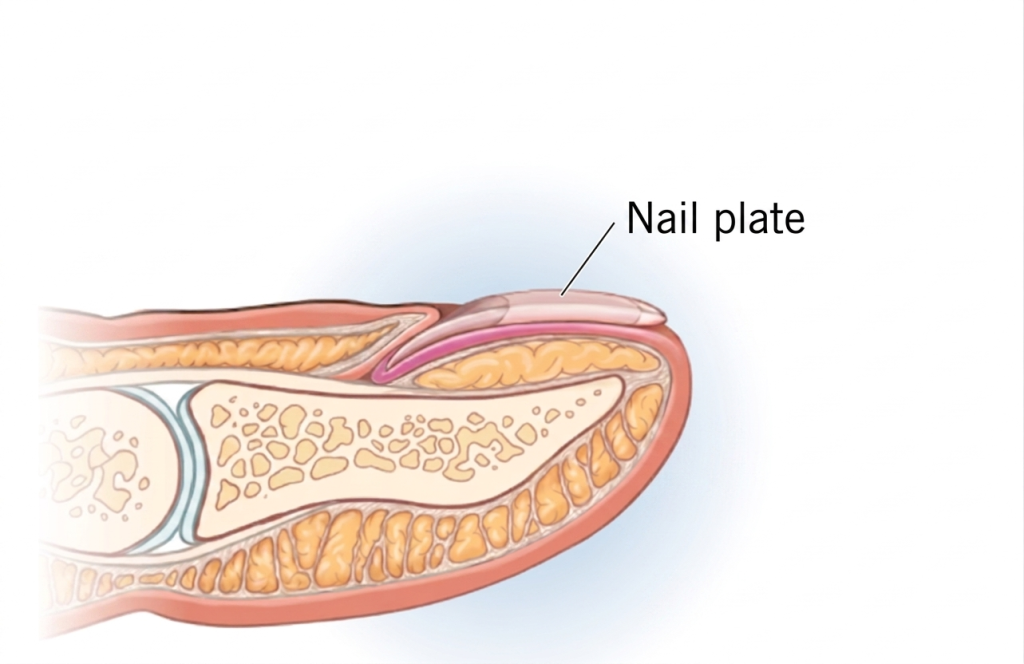
This is what we traditionally call the “nail.” It is made of layers of translucent keratin. Contrary to popular belief, the nail plate is not one solid piece, it’s a compact structure of about 50 to 100 layers of cells. When you peel off your polish or acrylic, you are literally ripping away the top layers of this keratin, which is why your nails feel thin and bendy afterward.
3. The Cuticle vs. The Eponychium
This is where 99% of people get it wrong!
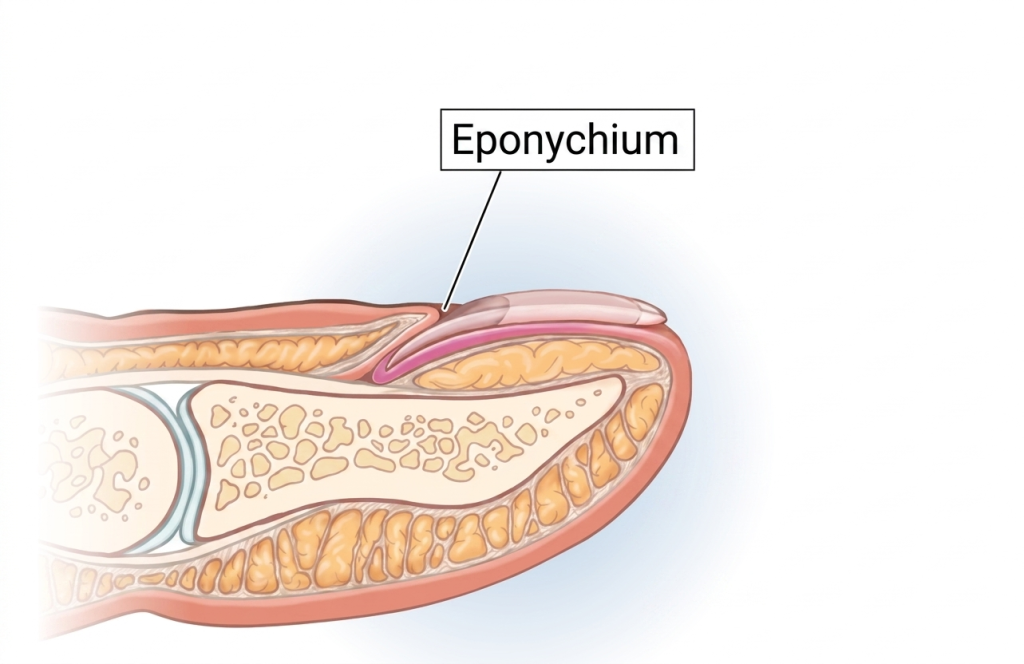
- The Eponychium: This is the living skin at the base of your nail. It acts as a waterproof seal to keep bacteria out of the matrix. Never cut this!
- The Cuticle: This is the dead, translucent skin that hitches a ride on the nail plate as it grows out. This is what I safely remove during a manicure to ensure your polish sticks perfectly.
4. The Hyponychium
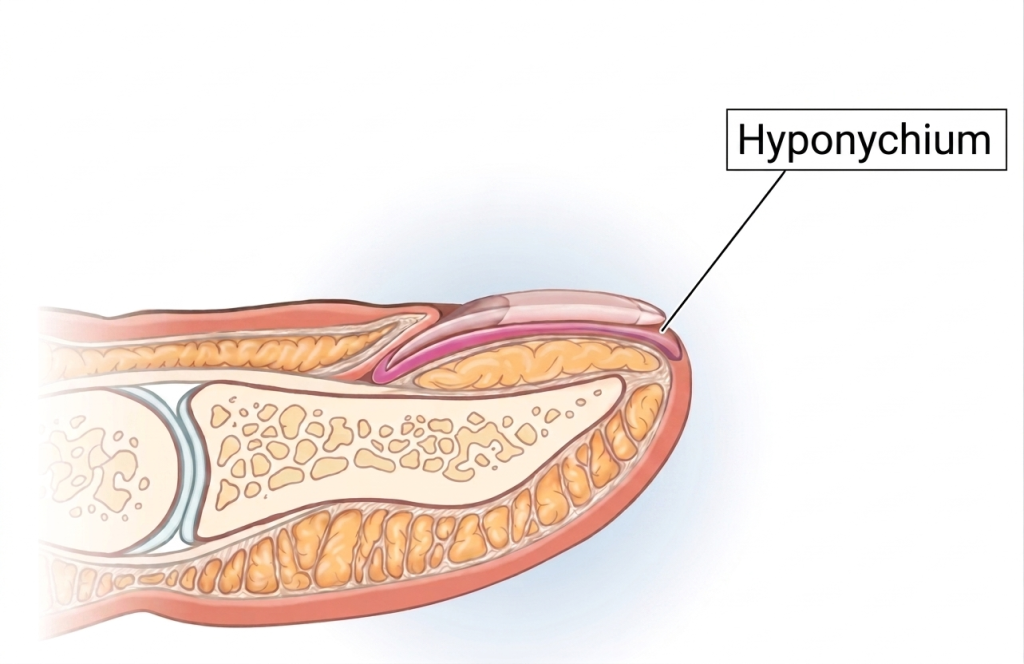
This is the skin underneath your free edge (the part of the nail that hangs off your finger). It seals the nail bed. If you have long nails, you might notice this skin traveling up the nail. This is your body’s way of supporting the extra length. Not everyone has a long hyponychium thought!
Debunking the Myths
Now that you know the anatomy, let’s clear up the old wives tales that have been floating around the salon for decades.
Myth #1: “Nails need to breathe.”
The Verdict: FALSE. This is perhaps the most common myth in the industry. Nails do not have lungs! They get all their oxygen, nutrients, and blood supply from the nail bed beneath them. They do not suffocate under polish or acrylic.
- The Reality: People often think their nails need a break because they feel weak after a set is removed. This usually isn’t because of a lack of air, it’s because of improper removal or the fact that the nail is naturally more flexible without the hard coating of a product.
Myth #2: “Acrylics and Gels ruin your natural nails.”
The Verdict: FALSE. Enhancements don’t ruin nails, technicians and clients do.
* The Reality: Damage occurs in two ways:
1) A tech over-files the natural nail plate during prep.
2) The client picks, peels, or bites the product off.
When applied and removed professionally, your natural nails can actually grow longer and stronger under enhancements because they are protected from daily wear and tear.
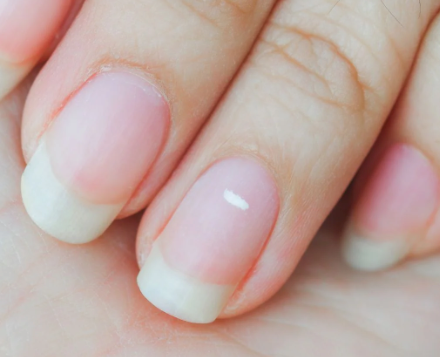
Myth #3: “White spots mean you have a calcium deficiency.”
The Verdict: MOSTLY FALSE. Those little white clouds also called leukonychia are rarely about your diet.
- The Reality: Most often, these spots are just like bruises on the nail. If you bumped your finger against a desk three weeks ago, that trauma shows up as a white spot as the nail grows out.
Myth #4: “I can’t grow my nails because they are too weak.”
The Verdict: FALSE. Almost anyone can grow long, natural nails with the right seal and protect routine. It’s about moisture and protection, not just luck!
Myth #5: “Gel X or Press ons are healthier than Acrylics.”
The Verdict: IT DEPENDS.
In the nail community, there is a lot of marketing fluff suggesting that certain systems are vitamin infused or organic.
- The Reality: Whether you are using Gel X, traditional Acrylic, or Hard Gel, the chemical base is similar (acrylates). One isn’t necessarily healthier for the nail plate than the other. The health of the nail depends 100% on the application and removal. A poorly removed Gel X set will cause more damage than a professionally maintained acrylic set. Don’t fall for the marketing hype, focus on the skill of your technician instead!
Don’t fall for the marketing hype, focus on the skill of your technician instead! Explore my website to see the results of healthy application and removal.
Myth #6: “Tapping your nails on the table makes them grow faster.”
The Verdict: FALSE (mostly).
I’ve heard many people say that stimulating the nail by tapping it on a desk increases blood flow to the matrix, causing the nail to grow like crazy.
- The Reality: While blood flow is essential for nail growth, tapping your nails on hard surfaces is more likely to cause micro shocks to the nail plate. This can lead to lifting or small fractures in your gel or acrylic. If you want to increase blood flow, give yourself a gentle 30 second finger massage with cuticle oil. It’s safer and much more effective!
Myth #7: “UV Lamps will give you skin cancer.”
The Verdict: HIGHLY UNLIKELY.
This is a scary headline that pops up in the news every few years.
- The Reality: Recent studies by dermatologists have shown that the UV exposure from a bi weekly manicure is equivalent to spending an extra 2 minutes outdoors in natural sunlight. Most modern lamps are LED, which use a very specific, narrow spectrum of UVA light for a very short time. However, if you are concerned, you can always wear manicure gloves or apply spf to your hands before your appointment.
Myth #8: “Rubbing onions on your nails (or eating them) makes them thicker.”
The Verdict: BUSTED (mostly).
This is a myth that has circulated in many cultures for generations. The idea is that because onions are rich in sulfur, and our nail keratin is also rich in sulfur, the onion will transfer its strength to the nail.
- The Reality: While it is true that keratin contains sulfur, rubbing an onion on the surface of a dead nail plate won’t do much. The nail plate can absorb the sulfur from a vegetable in a way that changes its structure.
- The “Stinky” Truth: Eating onions is healthy, and a diet rich in sulfur containing foods (like onions, garlic, eggs, and broccoli) is good for nail production at the matrix level. However, simply rubbing them on your tips will mostly just leave you with hands that smell like a burger joint! If you want thicker nails, focus on a balanced diet and high quality cuticle oil rather than the pantry.
Myth #9: “You can fix a split nail with superglue.”
The Verdict: PLEASE DON’T.
We’ve all been there, your nail catches on a sweater and starts to tear at the side. The tiktok hack is to reach for the Krazy Glue.
- The Reality: Household superglue is not medical grade or cosmetic grade. It is extremely brittle and can trap moisture and bacteria underneath the glue, leading to an infection or a greenie. If your nail tears, the best thing to do is keep it clean and see your tech for a repair that uses flexible, breathable resin.
Is your natural nail health a priority? Book an appointment with me today to start your nail growth journey!
The Golden Rules of Nail Aftercare
You’ve spent the time and money to get a beautiful set. Here is how you protect that investment.
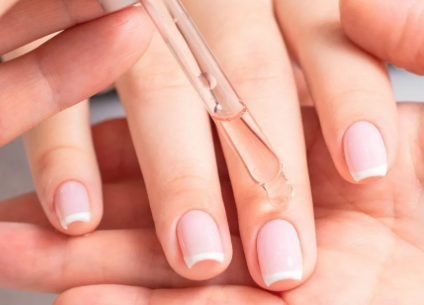
1. Cuticle Oil is Non Negotiable
If you take one thing away from this guide, let it be this:
Use cuticle oil twice a day. Oil keeps the nail plate and the surrounding skin flexible. Think of it like a leather jacket. If it gets too dry, it cracks. When your nail plate is hydrated, it can bend slightly under pressure instead of snapping or lifting away from the gel.
2. Nails are Jewels, Not Tools
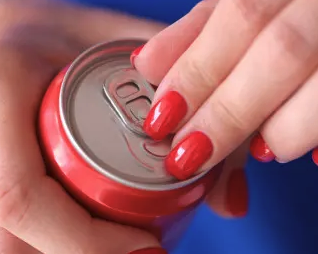
Stop using your nails to open soda cans, scrape off stickers, or prying things open. This puts massive stress on the stress point of the nail, leading to breaks and lifting.
3. Wear Gloves
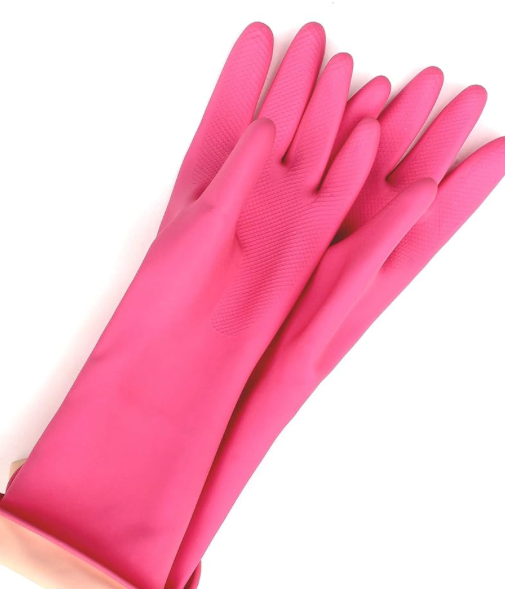
Cleaning chemicals and even prolonged exposure to dishwater can dehydrate the nail and weaken the bond of the polish. Always wear rubber gloves when doing household chores!
Ready for a fresh set? See my price list and let’s create something beautiful.
Why Professional Prep Matters
In this age, DIY nail kits are everywhere. However, without the anatomical knowledge we discussed, it is very easy to cause permanent damage. As a professional, I use a dry manicure technique. This involves carefully cleaning the cuticle (the dead skin) without damaging the eponychium (the living skin). This creates a clean canvas so the product can sit flush against the nail, preventing the lift that causes hair to get caught and polish to lift.
Why Your DIY Kit Might Be Hurting You
With the rise of at home gel and acrylic kits as well as amazon finds, many people have taken their nail care into their own hands. While I love the enthusiasm for nail art, there is a technical side to nail health that these kits don’t mention in the instructions. To hit our goal of total nail health, we have to talk about the risks of kitchen table manicures.
The Danger of Improper Curing
Professional LED and UV lamps are calibrated to specific wavelengths to cure professional grade gels. Many affordable home lamps do not have the power to cure the gel all the way through. To the naked eye, the nail looks hard and dry, but the bottom layer remains goopy and uncured.
When uncured gel sits against your nail plate for two weeks, your body can develop a permanent allergy to acrylates. This means you may never be able to wear gel, acrylics, or even have certain dental procedures or surgeries (which use similar materials) without a severe reaction. With me, I ensure every layer is cured to the exact second required by the manufacturer’s chemistry.
Over Filing and the Ring of Fire
Earlier, we talked about the nail plate. At home, many people use coarse files or cheap e files to prep the nail. If you file too deep, you create what we call a ring of fire which is a thin, red, painful area where the nail plate has been filed down almost to the bed. This makes the nail extremely sensitive to heat and causes product to lift because there isn’t enough strong keratin for the gel or acrylic to grab onto.
Sanitation vs. Sterilization
In my salon, I follow state board sanitation protocols. At home, it’s easy to reuse a file or a cuticle pusher without thinking twice. However, even small microscopic nicks in the skin can lead to bacterial infections like greenies or fungal issues if tools aren’t properly disinfected with solutions like barbicide. Your health is worth more than a $30 nail kit.
Seasonal Nail Care
Your nail anatomy reacts to the environment just like your skin does. Let’s look at how to adjust your routine based on the calendar.
Winter: The Dehydration Season
When the temperature drops and the heater goes on, the moisture in your air vanishes. This is when nails become brittle and are most likely to snap rather than bend.
- Switch to a moisturizing balm in addition to your cuticle oil. Look for ingredients like jojoba oil and Vitamin E.
- Wear gloves outside! Cold air saps moisture from your skin and nails instantly.
Summer: Chlorine and Sun
Summer is the season of pools, beaches, and vacations. While we love the sun, chlorine is a harsh chemical that can dry out your enhancements, making them more prone to chipping.
- After swimming in a pool or the ocean, rinse your hands with fresh water to remove salt and chemicals. Re-apply your cuticle oil to create a fresh barrier.
- Did you know UV rays can sometimes yellow your top coat?
Your nails are a reflection of your overall health and personal style. By understanding the anatomy of your hands and ignoring the myths of the past, you can maintain a stunning manicure for weeks without ever compromising the integrity of your natural nails.
Remember: healthy nails start with a healthy foundation and a technician who knows the science behind the art.
Check out my other nail blogs here !